


When pestered with questions, memory is like an onion
that wishes to be peeled so we can read what is laid bare letter by letter.
It is seldom unambiguous and often in mirror-writing or otherwise disguised.
Günter Grass
Peeling the Onion
First Chapter
- 1992 -
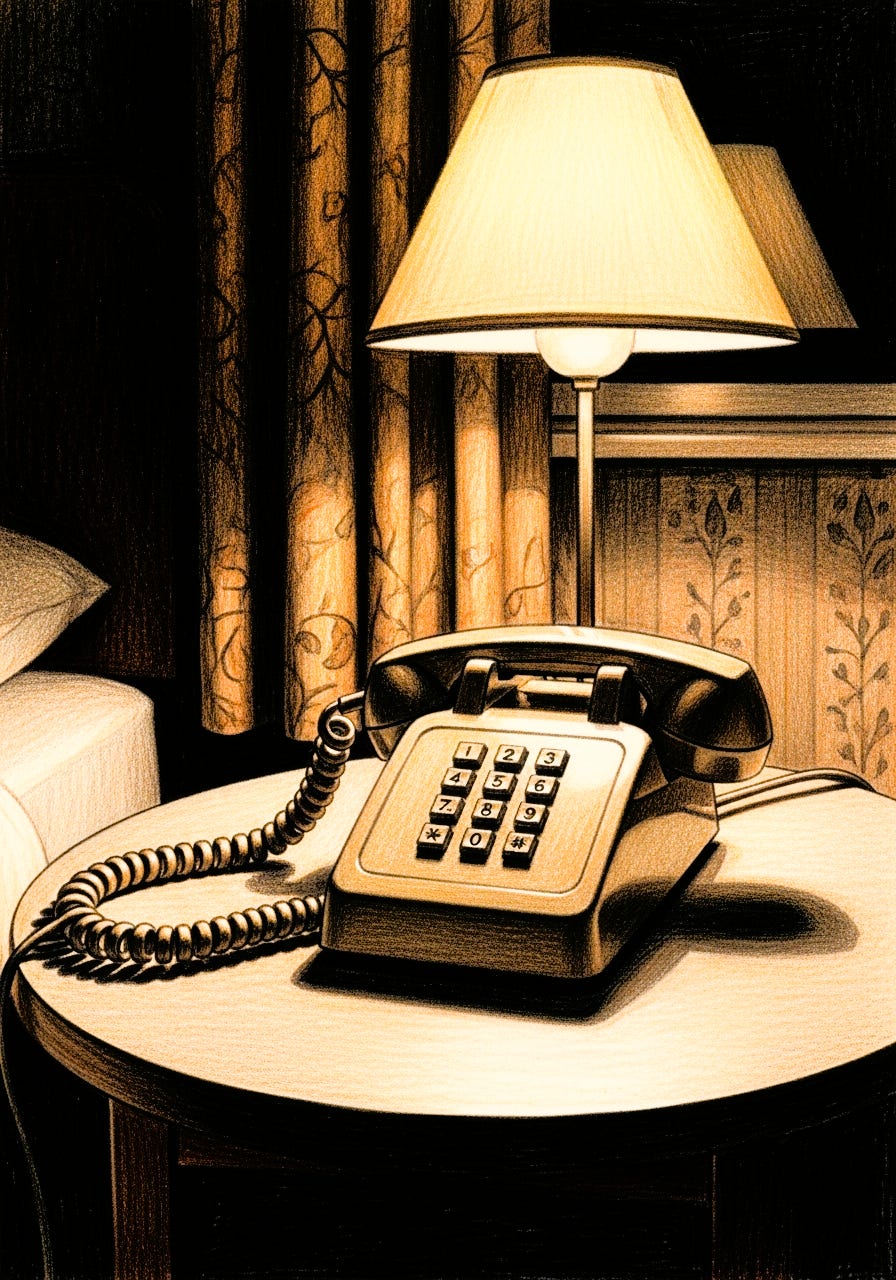
Juliet sat opposite the darkened window. She couldn’t say how long she’d been sitting there, staring at her reflection in the window glass. It had still been daylight when she returned to her hotel room, but now it was night. That was all she knew of time. A lamp above the bed illuminated a small island of light, with the telephone at its center.
Juliet wiped her tear-wet eyes and touched the receiver but didn’t dare pick it up.
What will she say?
What time is it in Zürich? Just an hour’s difference.
She couldn’t have borne the unanswered double ring repeating into emptiness.
The golden Rembrandt glow made her reflection in the window glass enigmatic. The hotel furniture shrank in the corners, as if waiting for Juliet to come back to herself at last.
What does she hope for? What does she want?
Juliet grabbed the handset, put it to her ear, and listened to the dial tone. She didn’t believe one phone call could set everything right again, that life would return to normal.
It will never be as it was.
Yet she couldn’t just sit here, fretting until morning. She dialed the number and listened to the beeps: one, two. Juliet held her breath: three, four. She stopped counting.
She’s calling too early.
“Hello!”
At the sound of his warm baritone, Juliet couldn’t hold back: tears rolled down her cheeks. “Dad!” she sobbed.
“What’s happened? Are you crying?”
The concern in his voice made silence impossible, but Juliet could not put words together. “Dad!”
“You’re scaring me! Did someone hurt you? Where are you?”
That, at least, was easy to answer, “In Bradford.”
“Where?”
“In the north. It’s... West Yorkshire. There’s a museum… we went there. Derek drove me.”
“Is he there with you?”
“No, Dad... well, yes. He’s staying at the same hotel, but I’m alone in my room.”
“Did you have a quarrel?”
“No, Dad, no. The museum has photographs that they do not exhibit... some sort of legal restriction... And Ted, Derek’s friend, showed them to us...”
“Wait—what photographs?”
“Well… old photos. Black and white. From the seventies. Ted said they were, I don’t know, twenty years old… And there—there was this little girl. In the picture. Taken on the street. Dirty little girl. Rubbish all around. The caption said London. I don’t remember the exact year…” Juliet hurried to get rid of the words that were choking her. “Dad, you might think I’m imagining things, but I can’t shake this feeling. It frightens me. I feel like—no, I’m sure, almost sure—that I know her. Not her exactly, but… the situation. The way she’s there. God, Dad, how do I even say this? She looks like me. At least it seemed so. The moment I saw her… Oh, Dad, where did you find me? From some dump? Why didn’t you ever tell me? Did something bad happen to me when I was little? I’m right—aren’t I, Dad?”
“Calm yourself, Juliet. The main thing is—don’t cry. Nothing in this world is black; everything is shades of gray. Are you listening? Drink some water and go to bed. Remember? With bright thoughts. Juliet?”
“Yes.”
“My dear… my little girl, think about how much I love you. How well you are doing now. It’s all behind you now,” he repeated. “In the morning, take an aspirin, then have Derek bring you home. I’ll get to London as soon as I can and tell you everything. We never talked about your adoption before—you were too young, and I thought you might not be ready. This isn’t an easy conversation. But now… it’s time. So, come home, wait for me there. I’ll try to get away at the first chance. Don’t build dreadful stories in your head. Juliet? You hear me?”
“Yes, Dad.” Her father, as always, pulled her back to reality—not solid, but at least into the present, here and now. “I’m sorry, Dad. I didn’t mean to alarm you. Don’t worry, please. I already regret calling so suddenly—it’s silly. All because of some photos... I can handle it. So don’t rush home; finish what you need to do... your business.”
“Are you sure?”
“About what?”
“That you can cope.”
“Of course—I told you. I’m coming home tomorrow.”
“And don’t forget to have a good breakfast before leaving that place... what’s it called again?”
“Bradford.”
“That’s it. Food cures misery.”
“Yes, Dad. Don’t be a bore.”
“Excellent! You’re criticizing me—the crisis must be over. I can wish you good night.”
“Night, Dad. Kisses. Bye-bye…”
“Wait! …Nothing. Okay. I’ll come back and we’ll talk. Just don’t work yourself up, Juliet. Promise me.”
“I promise not to work myself up.”
“Good night, darling.”
“Good night, Dad.”
After she hung up, Juliet exhaled, and when she tried to draw in air with the same force, her heart answered with an unusual ache. She paused, catching her breath. Self-pity pressed in on her again. Her father disapproved of sedatives and sleeping pills. Only in such extreme cases were they indispensable.
Yes, she was too young for such things, but she kept them in reserve, for rare emergencies. A little helper. For special occasions.
One, two, three. A silver capsule.
Let your dreams lie safe and still.
Juliet poured water into a glass.
Extreme case? Special circumstances? Isn’t it true?
Was the photo—the copy she had not thought to ask for—worth such an anxiety attack? A late call to Switzerland? It felt almost absurd now. She was being dramatic.
Juliet decided to go with her usual bedtime routine, rummaged through her bag, and found nothing. Things seemed to vanish. Juliet got annoyed. The hand mirror slipped to the floor but luckily did not break. The pills were there after all, exactly where she’d already looked. Juliet went to the bathroom, wiped away her smeared makeup, returned to the room, undressed, switched off the light, and crawled under the covers. After shivering in the cold bed, she gradually warmed and began to drift toward sleep.
She resolved not to give in, not to let disturbing thoughts take over again, not to be distracted from the sensations of crisp sheets, a cozy blanket, and the comforting weight of her body pressing into the mattress.
The pill worked faster than she’d expected. If only she wouldn’t wake with a headache.
Dad had advised her to take an aspirin after breakfast, after a “hearty English breakfast.” Not a bad idea.
Juliet woke and forced her heavy eyelids open. The room was dark.
Night. Still night. When will it end?
She squeezed her eyes shut as if in fright and rolled to the other side. She needed to sleep. Why wasn’t the pill working? She couldn’t have forgotten it. Or had she? Had she taken too little?
What now? Too late to swallow a sleeping pill. Dawn is coming soon.
Maybe it’s for the better.
She had not really wanted to take the pill. Someone had once said pills like these muddled your brain. Besides, she ought to think things over properly, with her nerves in pieces.
Did Juliet remember her childhood, or did she only think she did? Unpleasant pictures—even disgusting ones—floated up in her head: dirt, unwashed dishes, stained wallpaper, drunken people, rows and swearing, strangers coming and going. She was a little girl again, hiding, trying not to be in the way when someone lashed out. Had she been hurt? Juliet didn’t know. She didn’t remember. Was this a nightmare? Just a dream. Did it never really happen?
One thing she remembered for sure: she had a brother. An older brother named Jerry. How much older had he been? A lot older. At least to her, as a little girl, he had seemed an adult. Where was he? Why didn’t they see each other? Did her father forbid it? Was he trying to protect her from bad influences? But now that she was grown, she could find her brother.
How old would he be now?
Juliet imagined an unfamiliar street in a provincial town—somewhere in the south, for no clear reason, maybe even by the sea. She walks along rows of identical houses and stops in front of the right number. Her heart races. She reaches for the bell but hears no sound. The door opens. A middle-aged man she does not know stands on the threshold, unshaven, in tracksuit trousers sagging at the knees, a barely buttoned shirt. Her brother? “What do you want? Who are you looking for?”

