


I. Commensality
3 February 1977, Thursday
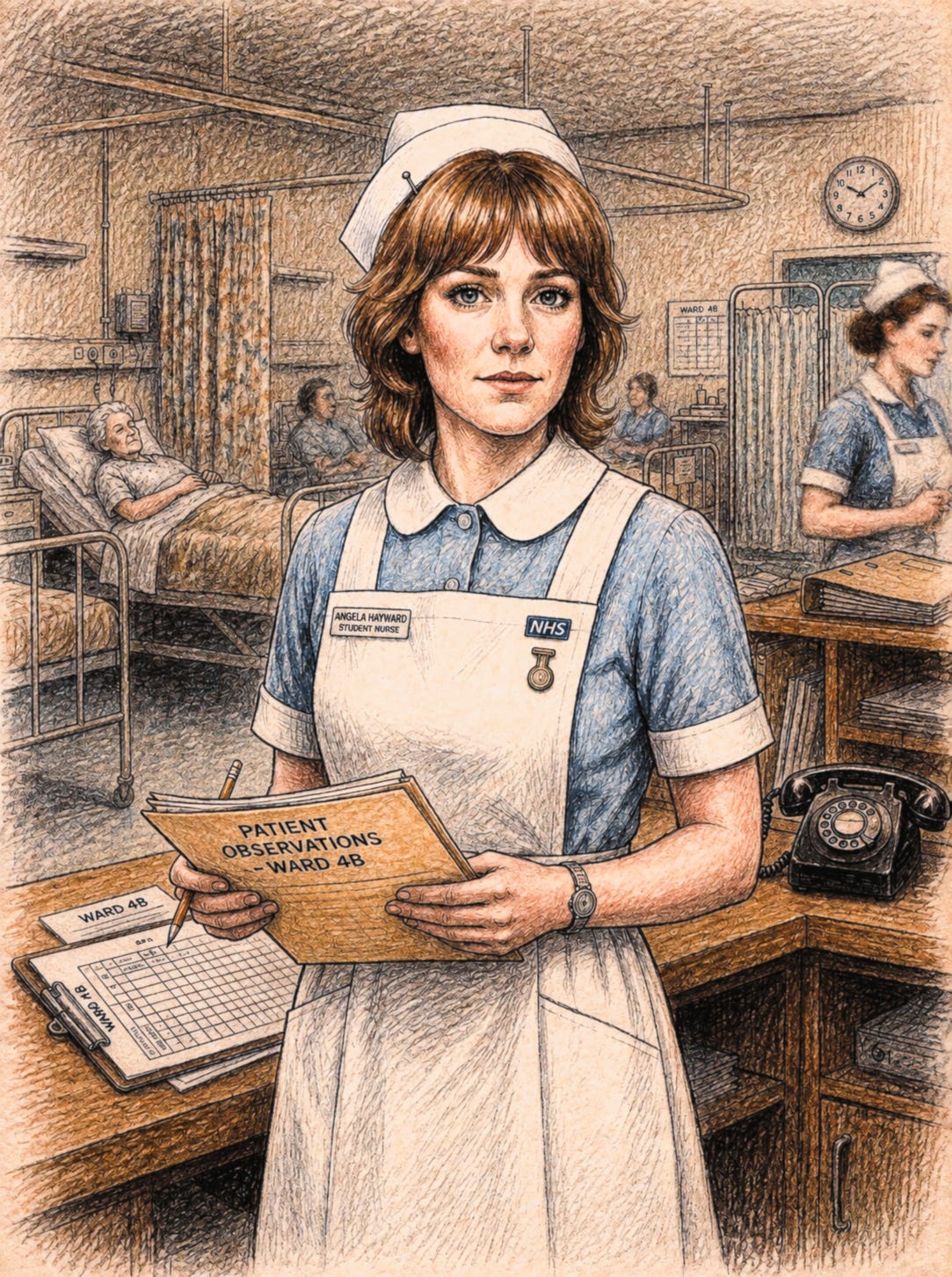
“Good morning,” Student Nurse Angela Hayward says to the policeman, who is engrossed in The Sun.
She picks up the basket the guards have left by the door and enters the room without waiting for an answer. “Good morning, Mr. Smith.”
“Morning, Miss Hayward.”
“Are you reading again? You should get more sleep, but I can’t even imagine you without a book. Why did they bring you so many?” She nodded toward the stack of new books on the floor by the bed. “What’s that you’ve got there?”
“La Violence et le Sacré.”
“Oh, something French. Is it a novel?”
“Anthropology.”
“I brought you some breakfast. That copper is such a blockhead. He didn’t call me when the courier arrived—again. I’m worried everything’s gone cold.” She sets the basket down next to the bed and takes out a thermos. “What’s Wilton?”
“I have no idea.”
“There’s a business card in the basket. Maybe it’s a restaurant?”
“Help yourself. They always send far too much.”
She unfolds the starched napkins. “How lovely! Look at this! Proper china!” She sits down and starts eating. “Mmm, that’s gorgeous. Aren’t you having any?”
“There’s only one set of cutlery. You first.”
“As you wish. But I almost feel guilty eating your breakfast. It was brought for you, and here I am acting like the hostess.”
“It’s all right.”
“Mr. Smith, is it true you’ve got Viyella pyjamas?”
“I don’t know what you’re talking about.”
“The day before yesterday, when they were throwing out the boxes your things came in—I wasn’t on duty then—I was told everything was from Harrods.”
“Care for a smoke?”
“I’ll have your Benson & Hedges Special Filter.”
“Help yourself,” he says, offering her the golden packet with one slightly protruding cigarette. “But I don’t have a lighter...”
“Oh, right—here,” she says, taking out her Ronson and reaching toward him while remaining in her chair; he leans over from the bed to light his cigarette.
She lights a cigarette too. “Mr. Smith, what have you done?”
“Nothing.”
“No, really. Those sullen bobbies are just getting in the way... Admit it, have you killed anyone?”
He smirks, just a little, or maybe it’s just her imagination.
“In self-defense, of course,” she continues and suddenly feels incredibly awkward. “Smith, is that a pseudonym? It’s a pseudonym, right? Are you really some lord’s illegitimate son?”
He seems about to laugh, but instead he starts coughing.
“Oh, I completely forgot to ask—how are you feeling? Better today?”
“Sort of.”
“So, is it true?”
“I hate to disappoint you, Miss Hayward, but none of what you said is true.”
“Well then, is your father some sort of underworld millionaire?”
“Where do you get all this from?”
“People talk,” she says, smoking while twirling a silver spoon in her other hand. “You can’t stop people from gossiping. We’re not used to that sort of thing here.” She made a vague circle in the air with her cigarette. “Piccadilly things.”
He looks at her—or rather, almost does. His gaze settles somewhere near her chin. He has put the book aside, and the expression on his face has grown even more miserable than before.
“Did I offend you in some way?”
“No.”
“I’ve chatted far too long with you, Mr. Smith—or whatever your real name is. I have to be going.”
“Good day, Miss Hayward. Do stop by when they bring lunch.”
“That was hurtful. Do you think I am here just for the restaurant food?”
“I just hope you’ll make sure the constable at the door doesn’t forget anything.”
“Ah, in that case—yes. I certainly will. Have a good day.”
She barely makes it out of the room before a police officer blocks her path. “You know, sweetheart, you’ve gone down the wrong path.”
“How dare you? Leave me alone!” Angela exclaims.
“Careful, love. You’re getting a bit too friendly with him.”
“Who do you think you are?”
“Got your head turned, have you? Solicitors running around after him in suits you couldn’t pay for in a year. His fancy clothes. Food cooked by a bloody chef. Books from some posh shop. Don’t be taken in by all this. He’s in custody, in case you hadn’t noticed. And for good reason.”
“He’s very nice.”
“Nice? Easy enough when you’ve got money behind you. Do you know what he did to his sister?”
“Sister?”
“His. Little. Sister.” The policeman emphasizes every word.
Angela is silent. Was anyone expecting something like this?
“The sort of thing decent people don’t talk about,” he continues, his tone not softening in the least. “So put an end to this little fling of yours.”
“You’re a boor, Officer,” she says what she must say.
“But I’m an honest man, unlike that one you’ve taken a shine to.”
Angela hurries away.
II. Consecration
3 February 1977, Thursday — Later that day
Angela doesn’t go to see him at lunch.
She brings him up in conversation with Jenny at reception—not exactly a friend, but a good source of information.
“What’s got you interested in him?” Jenny asks, though she doesn’t press for an answer. “At least four people have already come to me with questions about him. He’s practically the celebrity patient.”
“I just wasn’t on duty when they brought him in.”
“Oh, on Monday? Yeah, he was rolled straight into intensive care from court, under guard.”
“Is that really his name?”
“Jeremy Smith? That’s what the paperwork says. No other names.”
“It’s strange, though. I mean, Smiths don’t dress like that... or talk like that.”
“You hit the nail on the head there, my dear. He was brought in wearing rags. But then his solicitor showed up on Tuesday, and the floodgates opened. They started bringing him one thing after another. Turns out, he’s a Golden Boy.”
“Something doesn’t add up.”
“That’s what I think, too. But we won’t be left wondering for long. On Wednesday, some consultant from Harley Street came in to examine him and filed a report saying our rooms were terribly unsuitable for the precious Mr. Smith. Apparently, the ‘climate’ in this wing isn’t right.” Jenny speaks with such sarcasm that it’s clear she’s stung by it. “Arrangements had been made to transfer him as a private patient.”
“When?”
“Saturday.”
“This Saturday already?”
“Yes, money talks.”
“Gossiping?” Another nurse—Dorothy—comes up behind them.
She gives Angela a start.
“I had a word with Mrs. Higgins,” she announces. “We had tea last night. Aren’t I clever?”
Mrs. Higgins is a cleaner. She’s everywhere, hears everything, and nobody notices her. Angela should have thought to approach someone like that.
“And what does Mrs. Higgins know?”
“Well, she told me something interesting. The only people who come to see him are from the firm—shoving their business cards—*Talbot-Cavendish*—in everyone’s faces. But where’s the sobbing mother? Where’s the distraught father? Funny, isn’t it? No family.”
“You mean they paid for his solicitors but don’t want to see him?”
“And would you want that? If your son... did something to your daughter?” Dorothy falls silent, as if frightened by her own words. “ They allowed this to happen... Maybe all the rest of it is guilt.”
“So, is it true? Did he... you know... do that to his sister?”
“Looks like it.”
“He is a degenerate,” Jenny says indignantly.
Angela feels sick at the thought that she smoked his cigarettes and ate his food.
“And here’s something else I’ll tell you girls. Mrs. Higgins heard with her own ears Sister Thorpe talking to Dr. Trevelyan about how Smith was in such a condition... Sister Thorpe as good as came right out and called him suicidal. Smitty wouldn’t take a single bite until his family sent that solicitor in.”
“He brought himself to this state?” Angela answers.
“It’s a proper emotional blackmail,” Jenny says.
“Absolutely,” Dorothy agrees. “But now they’re spinning a yarn about how he couldn’t eat because of the stress of the arrest,” she continues. “You see? Smitty lies every time he opens his mouth.”
“Why would they do that?”
“What do you mean, ‘why’? He’ll be released on bail—that’s plain as day. With the kind of money he has. And a suicide attempt is basically like an escape attempt. I know for a fact. I asked Freddie; he’s clued up on this sort of thing. Bottom line: they don’t want that. Use your head.”
“He did something so vile, and yet he’ll walk free...”
“Only until the trial. But then, just see how they’ll try to get him off the hook...”
“Imagine being his mother,” Jenny says quietly.
Angela tries to picture what his mother is going through.
And yet, she feels drawn to his room. It is no longer just curiosity, but something more.
The emaciated boy holding out a packet of Benson & Hedges—he has a musician’s hands, he reads in French, he...
It would have been better if he really had killed someone.
She decides to go see him at ten o’clock and bring the Ampicillin, Codeine, and Mogadon.
A different police officer is on duty at the door—not the one who lectured her earlier that morning. This one is older and somewhat heavy-set; he greets her kindly.
The light in the room is already off. She reaches for the switch but thinks better of it.
“Miss Hayward?”
How does he guess it is her?
“I hope your day was better than mine.”
Then she hears a strange sound—metal against metal.
He is lying on his side with his right arm stretched unnaturally toward the headboard; one cuff is locked over the bandages around his wrist, while the other cuff is fastened to the bed rail. The handcuffs look huge and heavy on him. And he’s right-handed...
“I brought you your pills,” Angela says; her voice won’t quite obey her.
“Thank you.”
Her gaze lingers on his scraped cheekbone—a spot she had previously preferred not to look at. In the light from the hallway, it appears as a dark wound against his pale skin. Now she realizes: he is a prisoner. He is a criminal.
She leaves the pills for him. The nightstand is close enough; he’ll be able to reach them.
“Good night.”
Nobody has mentioned handcuffs before.
“Why do you do that?” she can’t help but ask the moment she steps out of the room.
At first, the police officer doesn’t understand—or pretends not to—what she is talking about.
“The handcuffs.”
“Ah, that’s just the procedure, love.”
“That’s barbaric.”
“You do feel sorry for him, don’t you?”
“No!” Angela replies—too categorically, too loudly.
III. Immolation
4 February 1977, Friday
Angela didn’t quite realize how it had come to this.
One thing simply led to another.
Dorothy called him a fake.
Yes, that was the perfect word for him.
And then she suggested teaching him a lesson.
With a guard right outside the door?
Dorothy was convinced that pulling off her plan would be a piece of cake.
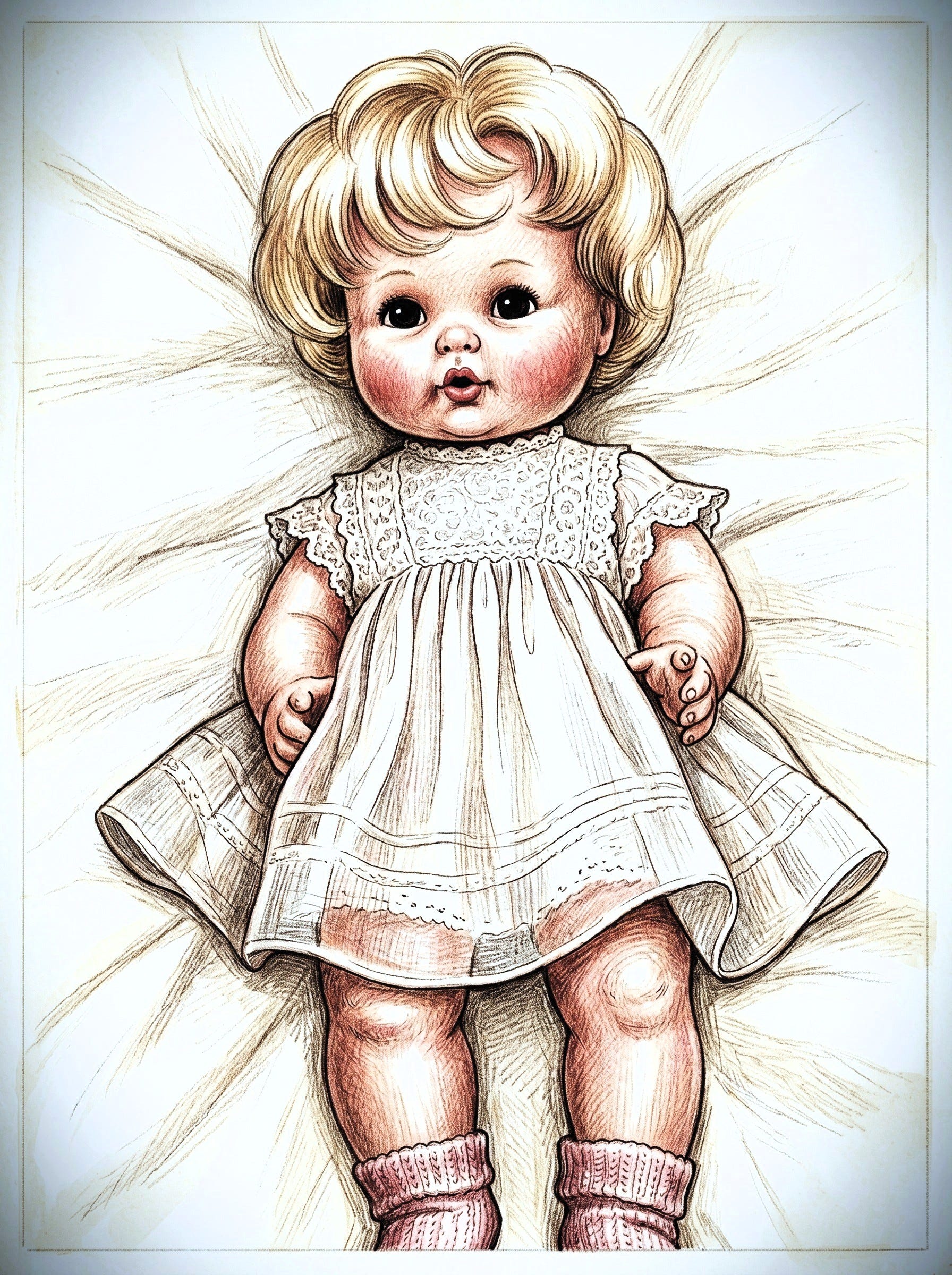
“He’s scheduled for a chest X-ray this evening. Bobby’s going to escort him downstairs. There won’t be anyone in the room. I’ve already got what we need,” she says, showing Angela a Baby Tender Love doll. “Borrowed it from the maternity ward. Just for the evening. Soft vinyl. Feel it—it’s just like a real baby. Only cold. Imagine having a dead infant in your bed.”
Angela touches the doll’s hand, barely tolerating it. For the first time, the doll looks creepy to her.
“It’s less than half a metre long,” she says uncertainly. “His sister can’t be an infant...”
“That’s not the point! It’s the hint that matters. We know what you did—and after that, you can clear off to your private room with your private nurses.”
That makes sense.
“Come on. Don’t be so wet.” Dorothy glances around, making sure no one is eavesdropping. “We don’t have time. He’s being transferred tomorrow. After that, we probably won’t see him again at all... We’ll ask the nurse on duty to let us know when they leave...”
They’re moving him... we won’t see him... yeah, we need to teach him a lesson. After all, what they’ve got planned is such a harmless prank—it’s almost insulting how trivial it is. It doesn’t even come close to what he’s accused of.
Angela nods.
Scare him with a harmless toy. And that two-faced phony, with all his posturing, will act like a total fool.
That evening, everything goes like clockwork. Mary is on duty—good-natured and not particularly bright; she didn’t even ask why they needed to know when Smith and his guard would be heading down to the basement for a chest X-ray.
Angela and Dorothy enter the empty room. The window faces the blank wall of the adjacent building; the room is dim even during the day, and doubly so in the evening. It smells different from the rest of the hospital. Expensive cologne? Expensive food? Expensive cigarettes? The smell of money.
Dorothy stumbles over a stack of books and kicks them under the bed. “Clever dick.”
They tuck the doll under the covers.
“Not that side,” Angela commands. “He usually lies there.”
The hospital bed is only ninety centimetres wide. On such a narrow cot, the doll takes up quite a bit of space. A dead child.
“The main thing he mustn’t notice anything beforehand.”
“Don’t worry. He won’t. He’s a bit groggy from the medicine.”
Then they climb into the linen cupboard. Fortunately, it’s empty. They remove the shelves and squeeze inside together, tight to each other.
How will they get out of here? At what moment? They haven’t quite figured that out. When the guard leaves—Mary will have to call him over after the incident, maybe ask for help with something or just create a distraction so he looks away for a minute—they’ll slip out of the room. Smith will see them, of course, but to hell with him. They’ll say he’d imagined it. A criminal’s word against theirs.
“The crucial bit is not to forget the doll,” Angela whispers.
Both press their index fingers to their lips and shush each other, but they can’t seem to settle down, continuing to jostle in the cramped space until they hear footsteps in the hallway.
The police officer practically drags Smith into the room and shoves him toward the bed. Smith sits down—or rather, collapses onto the edge, losing his balance. He is already handcuffed. Without a word, the officer unfastens one cuff—this time the left—and secures it to a horizontal bar of the iron bed frame, leaving Smith unable to lower his hand onto the mattress; then the officer leaves without saying anything, and Smith remains seated, leaning against the bed rail to which he is tethered.
Angela is growing impatient. It is stuffy inside the cupboard, and Dorothy is tickling her with her hair.
Finally, he slides down, trying to lie back, but the cuff leaves him half-reclined. The doll remains untouched beneath the covers.
He cannot get comfortable, and—though Angela doesn’t quite see it from inside the cupboard—his hand eventually brushes against that sinister, cold vinyl. Whether out of fright or mere reflex, he jerks his hand away and recoils from the doll with his whole body.
He doesn’t scream; he falls.
Giggles overtake both her and Dorothy as he slides sideways off the high hospital bed and onto the floor, accompanied by the clatter of metal. The handcuff chain pulls taut, leaving him dangling by his outstretched arm and letting out a stifled groan.
The laughter catches in Angela’s throat.
He clings to the bed frame with his free hand, unable to lower himself onto the floor or get back onto the bed.
Angela shoves Dorothy out of the cupboard and runs toward him.
A police officer bursts into the ward: “What the hell?”
Angela supports him, trying only to ease the strain on his wrist, to spare him some of the pain. “Uncuff him! Just uncuff him!”
His breathing comes in short, convulsive gasps.
She holds him with both hands, sitting on the floor, while the police officer fumbles with the handcuff lock. Then she lays him back on the bed.
The officer seems to have no idea what to do.
There is no sign of Dorothy.
Angela shifts the bandages to feel for a pulse in his injured arm. She can’t find one. She squeezes his fingers. “Mr. Smith, can you feel this? Do you feel anything?”
He doesn’t answer. His forehead is slick with cold sweat. He stares at her with unseeing eyes.
She cautiously touches his elbow through the sleeve of his pyjamas, then his shoulder. He lets out a shuddering breath.
Mr. Abernathy, from the casualty department, rushes into the room. Dorothy follows him.
“Left arm,” Angela hears, as if from underwater.
Mr. Abernathy pushes her away from the bed.
IV. Propitiation
5 February 1977, Saturday
The Senior Nursing Officer—Sister Thorpe—stands between her desk and the window, her arms crossed over her chest. Dorothy and Angela wait, standing motionless against the office wall.
Sister Thorpe had summoned them after meeting with his solicitor.
Dorothy whispers, “We’re done for.” She doesn’t stop crying. This irritates Sister Thorpe, who makes her annoyance clear; Dorothy pulls herself together but can’t hold it for more than a couple of minutes before she starts whimpering again. Like a small child.
Angela gazes at the gray sky outside the window. Another rainy day. She will get through it. Tomorrow will be easier. It certainly will be.
Finally, his solicitor arrives. Not just someone from the firm, but Mr. Talbot-Cavendish himself. He walks in without knocking, strides across the room—as though it were his own office—pulls up a chair, and sits down directly opposite Dorothy and Angela.
“Would someone care to explain how a handcuffed patient came to suffer a further injury while under your care?” the solicitor says in an icy tone. “Is that disputed by anyone?”
“It was just a practical joke...” Dorothy mumbles. “We didn’t think...”
“No.”
His tone makes Angela flinch.
“That much is painfully obvious.” He lets his words sink in. “When did you first become aware that he was handcuffed to the bed?”
Angela goes cold inside.
“And did either of you raise the matter with the doctor?”
What does he want to hear? Angela hasn’t even thought that they could question the use of handcuffs, let alone ask for them to be removed.
“So you knew he was restrained. And you nevertheless thought it appropriate to play a practical joke on him. What do you say, Miss Hayward?”
Angela doesn’t dare lift her head; she wrings her fingers. “I am deeply sorry...” She can barely get the words out, her tongue feels thick, and she despises herself for it. “I hope it’s nothing serious...”
“According to the attending physician,” he looks down at his papers, “a shoulder strain, a subluxation of the elbow, and a re-injury to the wrist,” he raises his eyes. “A mere trifle.”
Relief flickers through Angela; she had feared the worst—perhaps a full dislocation and surgery.
“I trust you appreciate the potential legal consequences,” the solicitor says.
Angela feels sick. She and Dorothy are such mugs for picking on someone with a solicitor.
“Section 47 of the Offences against the Person Act 1861—Assault occasioning actual bodily harm,” the solicitor speaks in a measured tone, like a verdict. “Up to five years in prison.”
Dorothy begins to sob aloud.
“Stop it,” the solicitor orders her.
And she falls silent, obediently.
“You ought to be the subject of a criminal investigation,” he continues. “The only reason you’re not already answering questions from the police is that my client has refused to make a complaint.”
He rises from the chair.
“I suggest you appreciate just how fortunate you are. You’ve been shown a kindness you did nothing to deserve.”
And he leaves.
Angela watches him go; as soon as the door closes behind him, she looks down at her hands. Could they put handcuffs on her? So heavy. So loathsome. She would have been branded a criminal... like him… and now... that won’t happen...
“You are both dismissed.” Sister Thorpe says. “Hand over your badges. Your training at this hospital ends today. You have no place in this profession.”
From Jeremy to Smith

“The Defense counsel’s closing argument was impressive, especially its conclusion...
